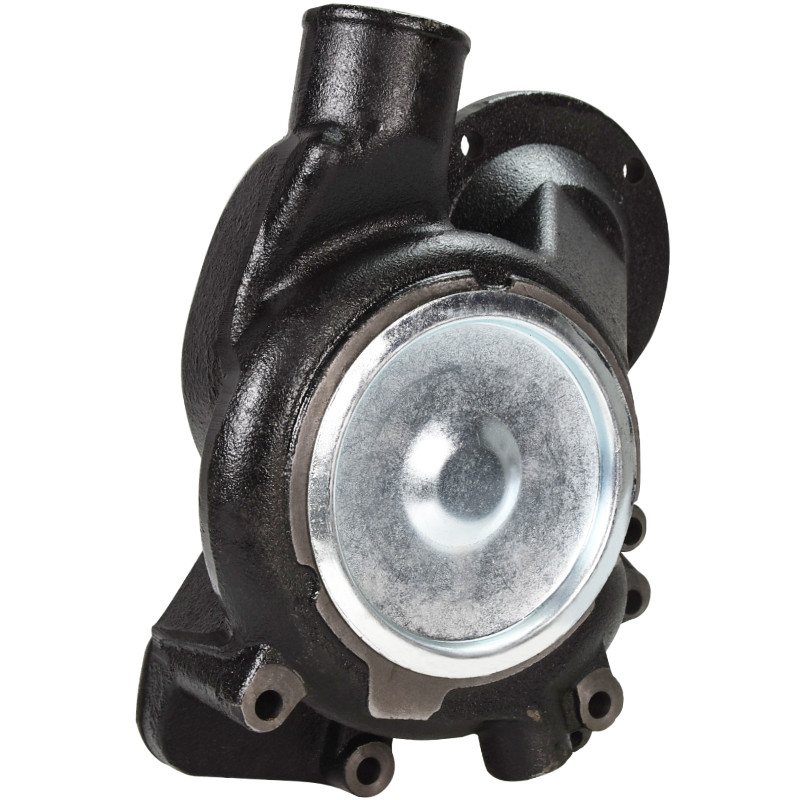
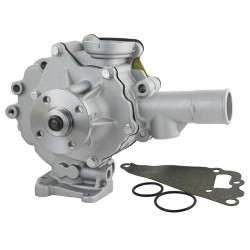
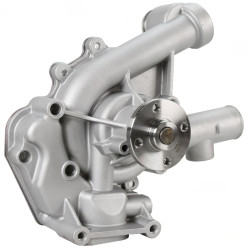
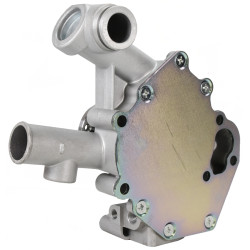
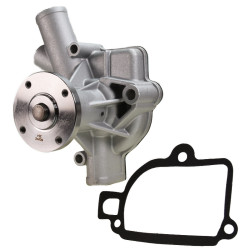
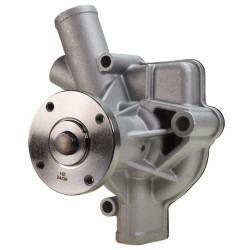
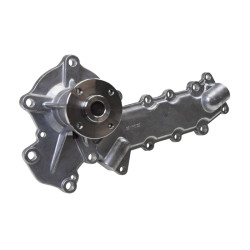
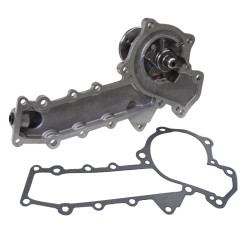
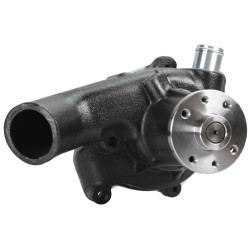
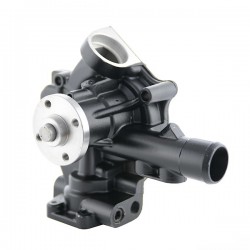
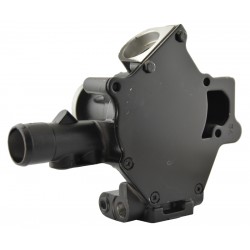
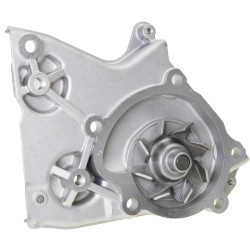
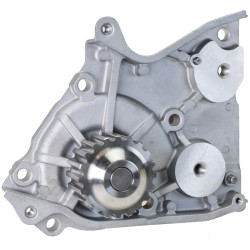
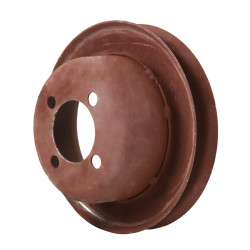
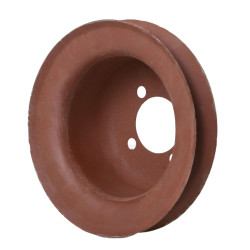
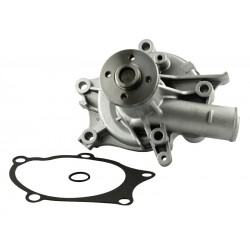
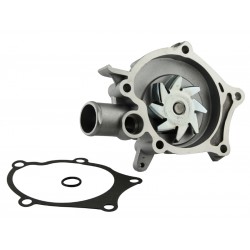
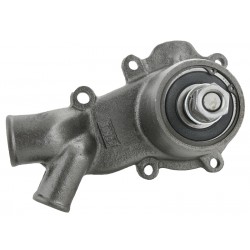
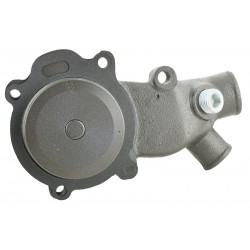
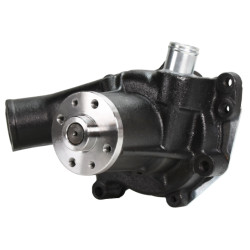
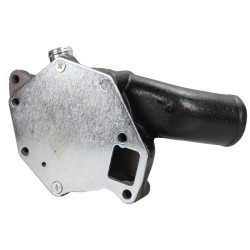
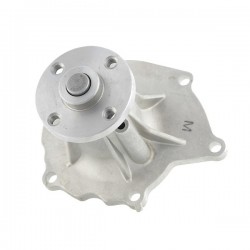
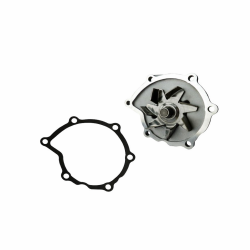
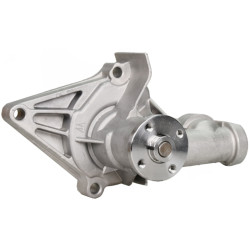
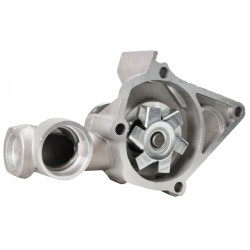
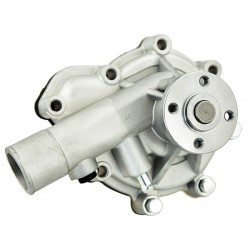
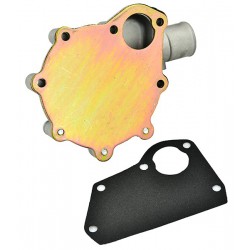
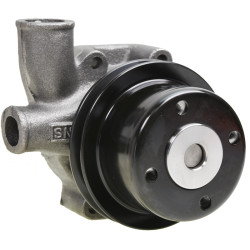
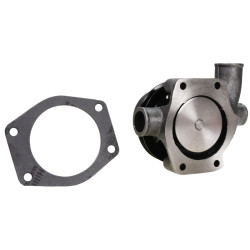
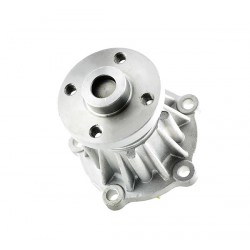
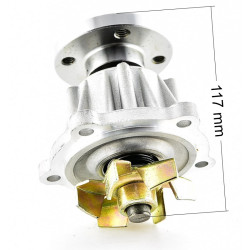
In accordance with Regulation (EU) 2023/988 on general product safety (GPSR), the following rules set out the safe use of a forklift water pump.
Use and intended purpose
- The water pump is part of the engine cooling system and circulates coolant between the engine block and the radiator.
- Use only on manufacturer-approved models/engine variants (match: pulley type/diameter, mounting pattern, direction of rotation, bleed/connection ports).
Identification and compatibility
- Before installation, compare OEM/part number, housing dimensions and bolt spacing with the removed part.
- Verify drive type (belt/gear), pulley profile and number of grooves, required belt tension and pump capacity.
- Ensure the coolant specification complies with the engine manufacturer’s requirements.
Main hazards
- High temperature and pressure: scalding risk; do not open the cooling system when hot.
- Chemicals: coolant is irritating and harmful if swallowed; avoid skin and eye contact.
- Moving parts / entanglement: risk from fan/belt/pulley; service only with the engine off and restart prevented.
- Leaks and slip risk: clean spills immediately; consider environmental impact.
Installation requirements
- Secure the truck, switch off the engine and allow it to cool; relieve system pressure.
- Remove the belt according to the manual; do not use impact tools on the pulley.
- Clean mating surfaces; use new gaskets/O-rings and fasteners to specification. Do not use sealants unless specified by the manufacturer.
- Tighten bolts in the prescribed order and torque. Route hoses without kinks and away from sharp edges.
- Fit a correct belt, set tension and check pulley alignment.
- Fill with the correct coolant, bleed the system and check for leaks after start-up.
Safe operation
- Regularly check coolant level, belt condition (cracks/wear), bearing noise and seals (traces from the weep/drain hole).
- Keep airflow paths and the radiator clean; use moderate air/water pressure (do not bend fins).
- Do not operate with low coolant level – risk of cavitation and engine overheating.
Maintenance and inspections
- Replace coolant at prescribed intervals; use demineralised water where required.
- After any work on the cooling system, perform a pressure leak test and a test drive while monitoring temperature.
In case of leakage or failure
- Stop the truck, switch off the engine and allow it to cool; do not open the system when hot.
- Locate the source of the leak, contain with absorbent material; clean contaminated areas according to safety rules.
- If bearings/seals are damaged or noise is excessive, suspend operation until the pump is repaired or replaced.
Storage and transport
- Store dry in the original packaging; protect ports and sealing faces from contamination/damage.
- Do not lift/suspend by the ports; avoid impacts that could damage the housing or pulley.
Disposal
- Dispose of used/damaged pumps via authorised metal/electromechanical recycling in line with local rules.
- Treat coolant as hazardous waste; never pour into drains or the environment.
- Recycle packaging after cleaning.
Additional information
- Installation and service must be carried out by qualified personnel using PPE (gloves, goggles).
- Follow the manufacturer’s documentation for torque values, bleeding procedure and belt tension.